Central Bank Digital Currencies (CBDCs) – does the emperor have any clothes?

5 Dec

I have been meaning for some time to write a blog on the subject of CBDCs, and am spurred to put finger to keyboard by an excellent article by Barry Eichengreen in today’s FT (5th December) – ‘CBDCs- a bad idea that won’t go away’.

I won’t repeat his arguments. But it is worth thinking for a moment about how a CBDC – say a digital £ – would actually work. It’s digital, so you will need open a digital account (with the Bank of England?) so you can buy your digital £s, and perhaps add them to your Apple or Google Wallet.

My basic problem with CBDCs is this: if you already have a bank current account, what is the difference between your digital £s and the £s in your current account?? For us happy souls who, in the UK at least, still enjoy free in credit banking, the answer is none.

Eichengreen’s article also deals with the financial inclusion argument. It is a little different in the UK, as major banks are required to offer a no-frills no fee no overdraft ‘basic bank account’ which does require credit checking. There are now over 7m of these in the UK.

Arguments about the costs and inefficiencies of existing bank payments rails are amusing, if nothing else, and Eichengreen is especially good on the cross-border issues. But when you start to think of the build and roll-out timescales and costs of CBDCs, you rapidly start to see a payments version of the HS2 fiasco. Will the Bank of England build something itself? Hopefully not, if the CHAPS experience is anything to go by (Chaps is the UK’s wholesale payments system for payments over £30,000). When it fell over for a day in, I think, 2016, the backup system was deemed too poor to use. Various enquiries followed, but it is not a happy precedent. Perhaps the Bank will outsource its build? Perhaps to Pay.UK, who are still trying to implement the New Payments Architecture first referred to in 2017.

But build and rollout are only part of the problem – the greater one may well be adoption. If people can’t tell the difference between a CBDC £ and their current account £, why will they alter their behaviour and use CBDCs?. What customer protections will be offered if you use your CBDCs to purchase goods and services? What will the dispute resolution process be?

Hence the Day Kaye picture at the top of the article. The ‘magic suit’ of CBDCs is about as useful as the emperor’s new clothes. Any do watch the Danny Kaye clip on YouTube: https://www.youtube.com/watch?v=VQQ3LCWZJd4

Border Crossings by Mohammad Chowdhury

27 Nov

I first met Mohammad when he was a new direct entrant into the management consulting practice of one of the Big 4 accounting firms. We had an interesting exchange. He was about to start a small assignment for a major client, National Grid. He explained to me that Ramadan was about to start, and as a Muslim he would be fasting from sunrise to sunset. That could make him faint and potentially irritable – and as his manager on the assignment I should be aware of this.

My side of the the exchange was simpler – I explained what a spreadsheet was (he was an Oxford graduate in Politics, Philosophy & Economics, so not a difficult concept for him to grasp) and how he would need to use it in his assignment.

This small exchange encapsulates the theme of this book – how Mohammad, as a second-generation immigrant from Bangladesh, developed his career and explored his Muslim faith. In doing so, he had to undertake many ‘border crossings’ – some cultural, some the actual crossings of physical borders. He recounts both in this book, and the physical border crossings include a fascinating account of his entry to Israel at the Allenby Crossing, and how to exit from a newly-independent Kazakstan with an expired Russian visa.

The book is subtitled ‘My journey as a Western Muslim’, and some of the best parts are Mohammad’s reflections on racial, religious and ethnic tensions. In one memorable passage, he asks us to imagine what London would be like if it was ‘as fragmented by sectarian division as Beirut has been… I imagine Wood Green Turkish enclave…Southall controlled by Sikh separatists’.

But as well as the humour, he has interesting things to say about his developing faith – noting that some supposedly Muslim practices are more based on local tradition than the Koran, and contrasting earlier times of Muslim learning and flourishing with the narrower focus of Muslim learning and scholarship today. The insight I found most illuminating was his view on how long it would take for ‘home grown’ democracy to become established in the Middle East – ‘I claimed confidently that we were in the early stages of one hundred years of turmoil that began with the Iranian revolution in 1979’.

The book is definitely a ‘good read’. As a Western Christian, I found it enriched my understanding of the Muslim world. When, at the end of the book, Mohammad returns to Sonarpur, where the Chowdhury family had been landlords in colonial times, his driver notes ‘you are like your father…[willing] to sit with everyone and chat about nothing in particular’. More chatting and less posturing – and definitely less military intervention – must be the way to go in our world of racial, religious and ethnic tensions. This book helps with that.

Available at Amazon and (probably by special order) at your local bookstore – see https://amzn.to/3lf3tLt

Caveat emptor on hedge funds

16 Jul

Monday’s Financial Times contains an important piece on the hedge fund industry – see https://on.ft.com/gift_link It quotes one academic study as showing that ‘investors earned just 36 cents for each dollar in gross profits generated by the funds above the benchmark, the other 64 cents being collected by hedge fund managers’. It would seem that the people making money from hedge funds are the owners of the funds rather than the average investor.
This has some similarities with the debate on indexed fund management. Over 20 years ago, when I was working at PwC, we did a study for Barclays Global Investors, which showed that, for large cap stocks, the average active fund manager underperformed against the benchmark by 2% pa or so over a 10 year period, and that investors needed to have a top quartile active fund manager to outperform an indexed fund.
Of course, in both instances, there is a case for the defence. In the FT piece, Aon point – no doubt correctly – to the importance of picking the right hedge funds and checking their capacity limits vis a vis their declared strategy; and our indexation study did find evidence of outperformance by active managers in small cap stocks.
But you have to wonder – is this a case where competition does not work effectively? There are a number of factors at work, including optimism bias and insider/outsider issues relating to asymmetries of information.
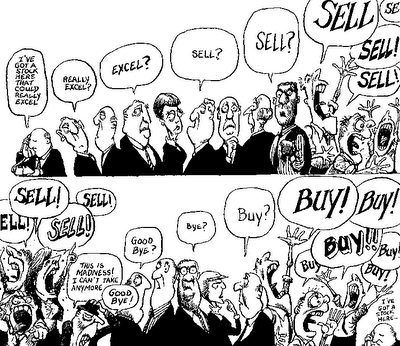
But ultimately you are reminded of James Tobin’s little old lady. You may recall the story – the little old lady has taken by an eminent economist to the floor of the New York stock exchange. The eminent economist explains that some people are selling shares, while others are buying them – at which the little old lady exclaims ‘but they can’t both be right!’
A very perceptive remark. The little old lady had correctly noticed that the trading in shares is close to a zero sum game – some people win and some people lose. If some fund managers are outperforming the benchmark, then by definition others will be underperforming it. In practice, of course, there are a whole variety of complications to take into account – the construction of the benchmark, role of new issues, and other factors. But the basic insight of treating the trading in shares as a zero sum game is a useful one that investors forget at their peril.

RIP PSR – the Payment Systems Regulator is no more

12 Mar

The reports of my death are greatly exaggerated

…as Mark Twain once cabled to the US press, his obituary having been published a touch early. Alas, no such reprieve awaits the PSR. Having been created by the Conservative coalition government in response to the great abolition of cheques imbroglio, it is now to be merged into the Financial Conduct Authority by Labour. See https://www.gov.uk/government/news/regulator-axed-as-red-tape-is-slashed-to-boost-growth

Should we shed a tear? It has done useful work in encouraging direct participation by smaller banks in the Faster Payments system and BACS, and the declining use of cheques has been made more efficient by the new Image Clearing System. But some of its other priorities could happily live elsewhere. Sorting out Authorised Push Payments looks very much like an FCA task, and its worthy work on cards and merchant acquiring could surely be done by a specialist sub-panel or committee of the Competition and Markets Authority.

The irony is, of course, that any sector regulator – Ofgem, Oftel etc – can happily be abolished when its sector has become ‘competitive’ in some sense and no longer in need of regulation. To misquote St Augustine, perhaps the sector regulator’s prayer is ‘O Lord, make my sector competitive, but not yet’.

Déjà Vu – the Future of Payments Review

8 Dec

Keen readers of the Autumn Statement will have noticed, in paras 4.44 and 4.45, the heralding of this Review:

‘The government is also committed to growing the UK’s world-leading retail payments sector. That is why the government supports Joe Garner’s independent review into the future of payments. The government is acting to implement the review’s core recommendations…’ [see https://bit.ly/3Rm6jz1 for the Review itself]

Like the curate’s egg, the review is good in parts. But it has a few curious features which are worth some comment.

First, it makes no mention of the last vision and strategy produced by the Payments Strategy Forum (PSF) in November 2016 from which the diagram above was taken. Indeed, as the review acknowledges, Pay UK are still busy implementing key elements of this – notably the New Payments Architecture.

There is certainly a case for reviewing and updating the PSF’s work – for example, it makes no mention of cryptocurrencies or Central Bank Digital Currencies. And it is unfortunate, to my mind, that the Payments Strategy Forum itself was wound up once it had produced its work. Had it continued to function as a forum, it could have shed some useful sunshine and challenge from all payments stakeholders on the more technical workings of Pay UK.

Second, it suggests that the vision and strategy should be led by H M Treasury (p29):

‘We considered where the creation of such an overriding vision and strategy should be led from and concluded that only HM Treasury has the influence and oversight to provide leadership to the entire payments landscape. To be successful, HM Treasury needs to allocate an adequate level of resource to develop the blueprint and to ensure its delivery.’

‘An adequate level of resource’ neatly summarises the problem – I suspect they will find that, when they open the resources cupboard at HMT, they will find it pretty bare. And what resources there are will be required to carry out the Review’s other recommendations – like monitoring digital exclusion (Recommendation 3, p11).

It would be far better to my mind to revive the Payments Strategy Forum to update its 2016 work – and readers might be interested in watching this video of its participants commenting on its approach: https://bit.ly/3N9JVGj. But perhaps that’s too ‘open government’ for the current administration, and they would prefer it behind the closed doors of HMT?

The final comment to make is on account to account payments being ‘too clunky’ because they rely on using sort codes and account numbers. While the ‘clunky’ epithet is true enough, the Review makes no mention of the key reason for this: unlike countries like India, with its Unified Payments Interface (UPI), we have no digital identity system in the UK. As The Banker made clear in a piece on this in early November, this is key to India’s success with UPI:

‘The basis for UPI’s success had been laid long before 2016. The Aadhaar digital identity (ID) system was introduced in 2009, with the aim of providing every Indian and foreign resident with a unique 12-digit identity number for use across a range of services….[see https://bit.ly/47Neudk for the whole article].’

The UK doesn’t have any national ID system – the last attempt at it was scrapped by the incoming Conservative government in 2010 by one Theresa May. Without it, P2P bank transfers are bound to be clunky.

It will be interesting to see what happens to the Review. The government seems rather keen on setting up Reviews which produce worthy reports which then sink beneath the waves – for example the Penrose Report on competition policy (see my bog from February 2021). It would be a pity if the same fate befell this Review.

‘Your career is on a roll’

20 Jan

A couple of developments have made me think about careers recently. First, LinkedIn has started emailing me telling me that my career is on a roll – a little odd, as I’m pleased to say I am now in receipt of the state pension 😎.

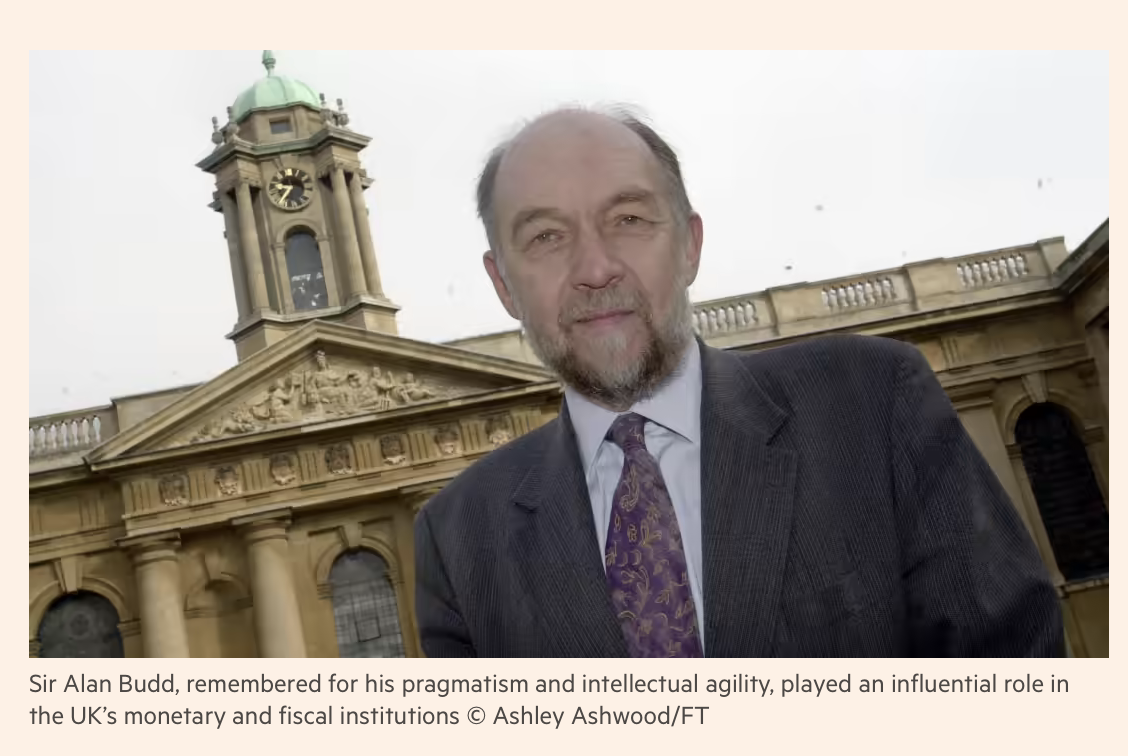
Then I saw in yesterday’s FT that Sir Alan Budd had passed on. He played a major role in monetary and fiscal policy in the UK, and his obituary in the FT (see https://on.ft.com/3GReexL ) points out that he is survived by some of the public policy institutions he helped establish – including the Office for Budgetary Responsibility. But aside from this, he also played a minor role in my career, as he interviewed me for the Government Economic Service.

The obituary quotes Andrew Bailey as saying his “overwhelming memory of Alan” is “how he combined thoughtfulness and great kindness to staff. He always seemed to appreciate what staff did, and find time to express it.”

So his career was not just about himself and climbing the greasy pole – he clearly had time for others. It’s a challenge for all of us – not just how we advance our own careers but how – perhaps through informal encouragement or more formal mentoring arrangements – we help others develop their own careers and interests.

Bean counters and the living wage

30 May

Colleagues at Business Fights Poverty have recently published a new report – The Case for Living Wages (https://businessfightspoverty.org/register-the-case-for-living-wages/ ). It shows that, for many companies, it makes sound business sense to pay a living wage rather than either a (lower) statutory minimum or whatever market conditions will let companies get away with. Offsetting a higher wage bill are benefits of higher productivity, lower turnover, greater loyalty and a potential sales uplift from socially aware consumers. It’s a good report.

But if it’s ‘good for business’, why don’t companies do it? For example, think of the UK Post Office, where paying low wages seems to trigger very high turnover (see https://morningstaronline.co.uk/article/b/royal-mail-plagued-by-disease-of-high-worker-turnover). Even worse, why do some companies do a “P & O” and end up with ferries they can’t operate and a hostile government and press?

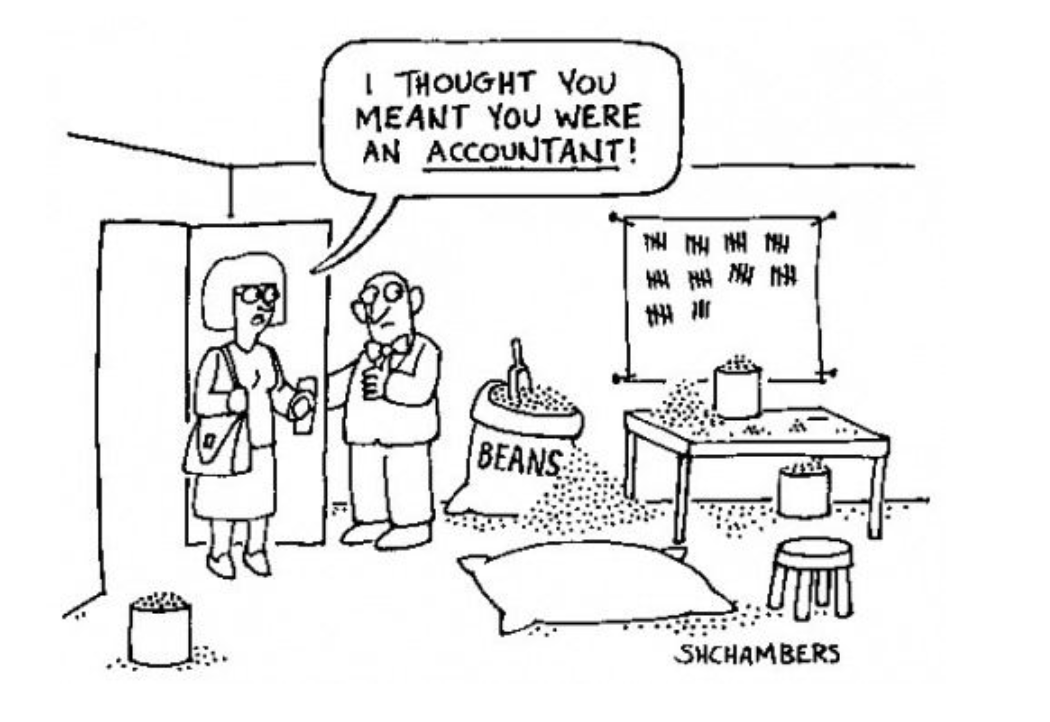
So somehow companies seem to be paying sub-optimal wages – which benefit neither the business nor the employees. Searching for reasons, the drive to cut costs without thinking through the consequences looks likely to be high on the list. The dreaded bean counter with his red pencil may not be optimising his companies profitability at all.

There are a couple of points worth emphasising here. The first one is highlighted in the report – it is easier if there is a collective push towards a living wage rather than piecemeal implementation – as Julie Vallat from L’Oreal says, ‘I always convey the message internally and externally that we should not be competitive on this issue. We will not achieve anything alone, if we are working in isolation on a systemic endemic issue’.

The second issue isn’t touched on in the report, but is important – the interaction of living wages with the tax and benefits system. A key reason businesses can get away with not paying living wages is that they look to the state to bail them out via the social security system. But this creates a massive hit to public expenditure and creates all sorts of bad incentives. Time for businesses – and the consumers they serve – to pay the living wage.

A EuroCard??

10 Jun

I see from yesterday’s Financial Times that a group of European banks planned to take on what they call the US payments oligopoly (https://on.ft.com/3wep8ab).

The number of European banks involved is impressive, and doubtless, with the rise of contactless payments, they have their eyes on the profit pools available in global payments. They also declare themselves worried by the ability of the US to ‘switch off’ European payments – perhaps if the Europeans fail to increase their defence spending? There is much talk of plans and blueprints, and they have even stumped up (not very much) money – €30m between 30 of them seems a bit mean.

I doubt if Visa and MasterCard – or even Apple Pay – are quaking in their boots at this prospect. As well as a 50 year lead time on the European venture (Visa was opened to banks other than Bank of America, its founder, in 1966), they will also take comfort from the failure of a group of US retailers, including Walmart, to launch their own credit card system, MCX (see logo above and https://bit.ly/3izjICC). How a new venture accesses the consumer history to prevent fraud will be a major issue.

Aside from that, they will need to break the chicken and egg problem – how do you get retailers to accept a card few consumers carry? How do you persuade customers to take out a card not accepted by retailers? Visa and MasterCard’s answer was a massive, costly TV advertising campaign. Today of course European banks would have an additional problem – why would I as a consumer switch from widely-accepted cards that work to the new system?

Standby for the crocodile tears of failure in a couple of years’ time.

Whatever happened to the Office of Fair Trading?

1 Mar
Lord Borrie QC pictured at his residential chambers in London Monday 25 September 2000 after he was announced as the next Chairman of the Advertising Standards Authority

Last week I commented on John Penrose’s report on competition policy – ‘Power to the People’. Now I see that Andrew Tyre, former chairman of the Competition and Markets Authority (and prior to that, civil servant at H M Treasury and then Conservative MP) has waded into the debate with a piece in the FT – http://on.ft.com/2MzN71X.

Somewhat curiously, given their similar backgrounds, Tyrie makes no mention of ‘Power to the People’ – perhaps suggesting a degree of intra-brand competition? However, the themes are much the same, and ones that Tyrie has promoted before – the need for a more pro-active approach from competition policy to protect from ‘rip-offs’, especially via price discrimination from the privatised utilities; more powers for the CMA to protect ‘the consumer interest’ (and not just to further competition).

One particular theme is common to both reports – more direct engagement with the public. Tyrie wants the CMA to follow the Bank of England’s example of more direct engagement with the public. Penrose wants ‘a new competition and consumer champion’, to be the micro-economic equivalent of the Bank of England (both Tyrie and Penrose seem to be not so secret admirers of the Old Lady). Both want a beefed-up CMA to fulfil that role. However, as Tyrie points out, ‘six years after the Office of Fair Trading was abolished and replaced by the CMA, 62 per cent of consumers had heard of the OFT. Only 19 per cent had heard of the CMA last year.’

So was it a mistake to abolish the Office of Fair Trading – which would, in its heyday, have fulfilled the ‘competition and consumer champion’ role that Penrose wants?

A brief personal digression at this point. Many moons ago – in 1977 to be precise – I was a young government economist seconded, for my second job in government, to the OFT. Gordon Borrie (see the picture above) was the Director General, having taken up the post the previous year. As his Guardian obituary makes clear (see http://bit.ly/3sD7Ilr), he was precisely the kind of consumer champion Penrose and Tyrie are looking for. The OFT, under his leadership, also tackled big issues – the London Stock Exchange, the beer industry, estate agents and car dealers.

However, it is important to understand the two factors that allowed him to do this. First, he had established his reputation as an academic lawyer championing consumer rights; second, the 1973 Fair Trading Act gave a clear role to the Director General, which was entirely separate from that of the (then) Monopolies and Mergers Commission – the DG made references to it, and implemented their findings, but he was not judge and jury on competition policy cases. By contrast, there is a clear conflict between having a chair of the CMA who is a consumer champion – an approach which both Penrose and Tyrie seem to favour – and their duties in running an impartial quasi-judicial body.

And I find it hard to think of an equivalent figure today to Gordon Borrie – who, when I was a very junior economist, would happily say “Hallo Richard” to me if we crossed in the corridor.

The curious case of the Penrose Report – ‘Power to the People’

22 Feb

You may, or may not, have seen this referred to in the press last week – it appeared in the Guardian but, as far as I can see from a quick Google search, was not reported elsewhere. The report by John Penrose MP focuses on how to improve the workings of UK competition policy, so that, as the report says on its front page, ‘markets work for people and not the other way round.’ (see http://bit.ly/3dA46fG).

As this was a report commissioned last September by the Chancellor, Rishi Sunak, the failure of the government’s publicity machine to make more noise about might seem odd, but perhaps no odder than the report itself. I was introduced to it last week via an online seminar hosted by the Regulatory Policy Institute (see rpieurope.org). John has clearly been an industrious chap. Without (it would appear) much research help, he has produced over 40 recommendations in his 70 pages.

The report shares many of the themes of Andrew Tyrie’s letter to the then Business Secretary, Greg Clark, in February 2019, although it adds its own spin on ‘cutting red tape’ (more of that anon). But unlike that report, which clearly drew on the resources of the CMA, which Tyrie then chaired, or the Furman Review on Digital Competition, it is short on its description of process. One suspects that this is because there wasn’t one – the report (and his presentation of it to the RPI) gives the impression that John has had a few chats, read the existing reports, and added a few thoughts of his own.

If that is right, it might serve as a useful ‘tract for the times’, perhaps designed to get the Tyrie letter back from the wpb and back on the agenda. The themes both raise are important ones – does competition law place enough emphasis on consumer interests?; do the competition authorities act rapidly enough with their current legislative powers in the new digital, global economy? – but it is not clear that the Penrose solutions have been fully thought through.

To focus on one example: the report correctly notes ‘too much red tape slows businesses down.’ But in the course of its 40-odd recommendations, it manages to add quite a few pieces of red tape of its own: it wants to ban price discrimination between existing and new customers; it wants ‘supercomplainers’ to be able to trigger a request to transfer sector regulator powers to the CMA; it wants an entirely new branch of the judiciary – County Competition Courts’; and it wants protection against ‘sludge’ – consumers who are exploited by ‘nudge theory’ (or plain old inertia). No cost benefit justification is offered for any of these.

Perhaps it’s less of a report, more of a nudge that the UK’s competition laws need a post-Brexit update? If government reads it and says ‘we can’t possibly do that’ perhaps it will spur them to think what they can do. If it achieves that, it will have performed a useful service.

Christmas Greetings to friends and colleagues near and far

22 Dec

I trust you enjoy the Christmas season -different and constrained as it is. The movie below is 2 minutes with a calypso carol and some local pictures.